Indonesia’s Youth Job Crisis: A Closer Look at the Struggles and Opportunities
The issue of youth employment across Indonesia is a subject that has been discussed at length in recent times. With over 44 million young people in a nation spanning more than 17,000 islands, the challenges are both far-reaching and full of problems. This opinion editorial aims to dive in to examine the tangled issues, exploring how the working environment, economic policies, labour laws, and societal expectations intersect to create an intimidating situation for new graduates and young job seekers alike.
The Reality Behind The Struggle to Find Appropriate Employment
Consider the journey of Andreas Hutapea, a law graduate who hoped a university degree would guarantee a stable career. Instead, his path was overshadowed by continual rejections. His story is not unique; many Indonesian youths are confronted with a series of confusing bits after a formal education that fails to match the needs of a modern job market. Hutapea’s setbacks include difficulties passing the notoriously challenging civil service exams—which offer opportunities to only a minuscule 3 percent of applicants—and failing to secure a trainee prosecutor position despite his credentials.
Back in his hometown on the outskirts of Medan, where his parents operate a small grocery shop, Hutapea now finds himself contributing without receiving a monetary wage. Instead, the shop offers him free room and board—a gesture deeply appreciated by his family. Yet, this scenario underscores a bigger issue: a well-educated youth is often forced into informal labor simply because formal, well-paying positions remain elusive.
Youth Unemployment in Indonesia: Statistics and Societal Impact
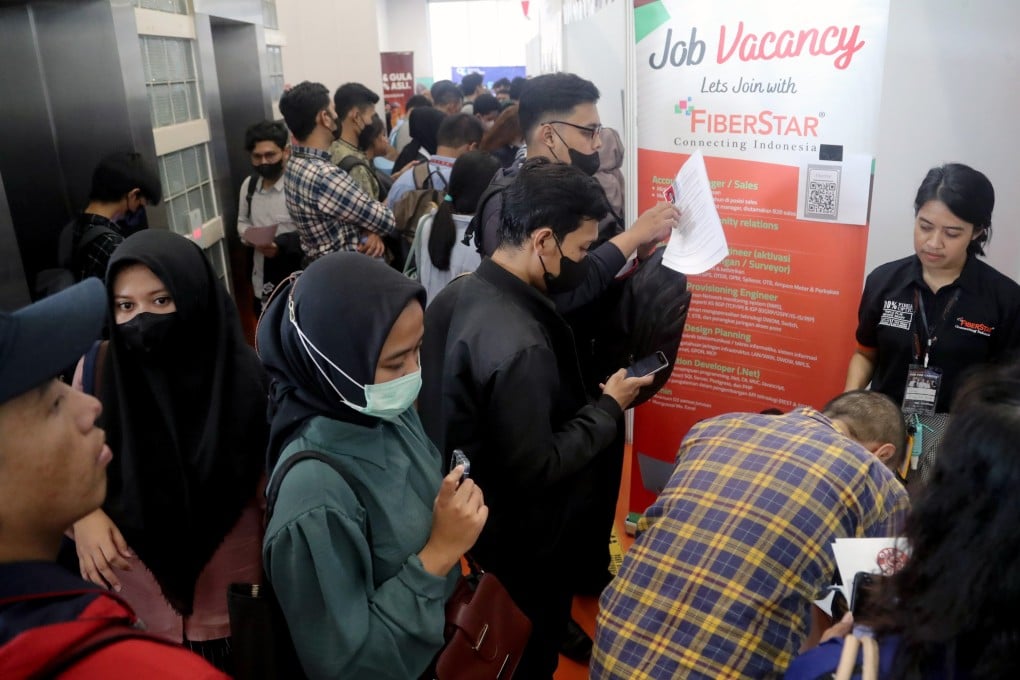
Government figures reveal that roughly 16 percent of Indonesians aged 15-24 are currently out of work. This rate is more than double that of neighboring countries like Thailand and Vietnam. Several surveys have also highlighted the pessimistic outlook held by many young Indonesians regarding the country’s economic prospects. While about 75 percent of youth in neighboring countries express optimism about their government’s economic plans, only around 58 percent of Indonesian youth share this sentiment.
Economic realities have a direct and significant impact on the mental and emotional wellbeing of young people. With high unemployment rates and a job market that consistently falls short of expectations, the dreams of many young graduates appear to be more of a long-term negotiation with fate than a reflection of their efforts and potential. For many, the struggle is amplified by the fact that available positions often come with inferior wages, making formal employment a nerve-racking, uncertain process.
Unpacking the Tangled Issues: A Breakdown of the Key Factors
To better understand Indonesia’s youth unemployment crisis, it is useful to list and explain the key factors that contribute to the challenges at hand:
- Rigid Labour Laws: The tricky parts of Indonesia’s employment policies make it very difficult for companies to hire new workers. These laws often discourage employers from offering stable, formal employment, pushing many young people towards the informal sector.
- Poor Wage Structures: Wages that do not meet the expectations or cover the rising cost of living force many young professionals to either settle for unsatisfactory jobs or wait indefinitely for an opportunity that might never come.
- Mismatch of Educational Qualifications and Job Market Demands: Graduates specializing in various fields often find themselves underqualified for the available roles. The fine points of the skills–job fit are frequently overlooked, leading graduates to wait for better opportunities.
- Inadequate Vocational Training and Apprenticeship Programs: Compared to other Southeast Asian countries like Malaysia and Vietnam, Indonesia’s approach to vocational training remains underdeveloped. This oversight results in a significant gap between the skills provided by educational institutions and the real-world requirements of modern industries.
- Regional Disparities: The challenges are also compounded by a stark difference between job availability in urban centres like Jakarta and the remote, rural areas outside Java. Many young people in less-developed regions face an overwhelming struggle just to find opportunities that match their potential.
These areas, while interrelated, each pose distinct challenges that require tailored solutions. Employers and policy makers must figure a path that harmonizes labour regulations with economic realities. Until this can happen, industries will continue to rely on a large informal workforce, exposing millions to socioeconomic vulnerabilities.
The Role of Government Policies in Shaping the Job Market
Indonesian President Prabowo Subianto, a retired general known for his stern leadership style, has acknowledged that fostering new job opportunities is essential. His government has launched task forces specifically designed to tackle unemployment and to negotiate on trade matters with significant international players such as the United States. For instance, recent agreements have led to a reduction in tariffs on Indonesian goods—from 32 percent to 19 percent—marking what many see as an essential step towards stimulating growth.
Yet, reducing tariffs is only one piece of the puzzle. While these moves are a positive step in opening up trade corridors and boosting exports, they do little to address the reassuring need for domestic job creation. The overall effectiveness of these policies is further complicated by the presence of twisted issues in labour market reforms, which have yet to fully support the rapid expansion of young professionals’ career prospects.
Bridging the Skills Gap: University Education vs. Market Demands
It has become increasingly clear that Indonesian institutes of higher learning are not adequately equipped to prepare students for the professional world. Many graduates, like Hutapea, find that their credentials do not translate directly into employability. A significant part of the problem is the lack of industry-university linkage schemes that are prevalent in neighboring nations such as Malaysia. This deficiency heightens the gap between the current skills of the workforce and the requirements set by employers.
Key observations in this context are:
| Issue | Current Status | Needed Improvements |
|---|---|---|
| Industry Links | Sparse connections between businesses and higher education | Stronger partnerships with real-world training programs |
| Vocational Training | Underdeveloped and limited in scope | Expanding and modernizing apprenticeship programs |
| Curriculum Relevance | Often out of sync with market needs | Regular updates to course content aligned with industry trends |
These steps are critical if Indonesia is to unlock the hidden potential of its young population. Without these reforms, the job market will continue to be a nerve-racking environment where even qualified graduates are forced to settle for positions that do not fully harness their abilities.
Regional Disparities: The Urban-Rural Divide in Job Opportunities
One of the most pressing issues for Indonesia is the vast discrepancy between urban job markets and those in remote regions. In major cities like Jakarta, Medan, and Surabaya, opportunities are comparatively more abundant, even though the competition remains fierce. However, for young people living in rural areas or on remote islands, finding stable and well-compensated work is a formidable challenge.
Several factors aggravate the situation, such as:
- Infrastructure Gaps: Poor transportation and digital connectivity make it difficult for rural residents to access job information and opportunities.
- Limited Local Industries: Many remote areas are heavily dependent on traditional agriculture or small local businesses, sectors that struggle to offer career growth.
- Migration Pressures: This often forces young people to leave their hometowns in search of better prospects in urban centres, leading to a brain drain in rural communities.
These challenges are not isolated incidents but instead represent the fine shades of a systemic issue. To bridge this gap, government policies need to prioritize infrastructure development while actively incentivizing businesses to invest in regional areas. Only by working through these problems collectively can Indonesia hope to create a more balanced and inclusive job market.
Understanding the Informal Sector: A Safety Net or a Trap?
Approximately 56 percent of Indonesia’s workforce is engaged in the informal sector. For many young people, this means that even when formal employment is out of reach, they can at least secure some form of work. The informal sector, with its lower wages and limited social security protections, serves as a safety net—but it is also often a trap that perpetuates vulnerability.
The challenges of the informal work environment include:
- Wage Instability: Jobs in the informal sector rarely come with consistent or competitive pay.
- Lack of Legal Protection: Workers often have little recourse in the event of employer negligence or exploitation.
- Poor Working Conditions: Without formal contracts, employee rights can quickly become secondary.
For many, the resultant work life is a constant balancing act between meeting immediate financial needs and preserving long-term career prospects. Young professionals, in particular, tend to avoid such roles, choosing instead to remain unemployed in search of better prospects. This decision, while understandable, places additional strain on both the individual’s financial security and the broader economy.
Government Initiatives and Their Mixed Results
Over the years, the Indonesian government has introduced various initiatives intended to boost employment and stimulate economic growth. Task forces dedicated to job creation and vocational training have been implemented, and international negotiations have led to some reduction in trade barriers. However, these policy shifts have so far yielded mixed results, largely because they have not fully addressed the hidden complexities of the employment market.
Some successes include:
- The reduction of tariffs on Indonesian goods, which has facilitated a modest increase in exports.
- Collaborative efforts with international partners to bring in expertise and investment.
- Pilot programs aimed at linking vocational training with industry needs.
Yet, for many young people, these steps seem like a drop in the ocean of a much larger problem. The small-scale projects are often overwhelmed by the inherent challenges posed by outdated labour laws, poorly targeted educational programs, and stark regional disparities.
Addressing the Mismatch: How Can Education and Employers Find Common Ground?
The disconnect between the skills taught in universities and the requirements of the modern workforce is one of Indonesia’s most pressing challenges. Many educated youths, despite having acquired a degree, find themselves woefully unprepared for the job market’s demands. This mismatch forces recent graduates either to engage in side gigs—such as setting up sound systems for events, as in Hutapea’s case—or to endure lengthy periods of job hunting.
Transformation is needed on several fronts:
- Industry-Academic Collaboration: Developing effective programs that connect the theoretical insights of academia with the practical work of industry.
- Curriculum Reforms: Updating educational programs regularly to reflect real-world scenarios can ensure that graduates have the practical skills employers currently demand.
- Internship and Apprenticeship Programs: Structured work placements that provide real-world experience should be expanded, mirroring successful models in other Southeast Asian economies.
Such initiatives would not only assist young job seekers in finding their way into suitable careers but also help employers by providing them with a workforce that is more aligned with modern industry trends. It is essential to recognize that the current model is both outdated and unable to keep pace with the rapid changes occurring in the economy.
Exploring Alternative Solutions: The Potential of Entrepreneurship
In the midst of these employment challenges, many young Indonesians are turning to entrepreneurship as a way to secure their futures. Entrepreneurship offers a path where one is not necessarily bound by the formal job market, allowing for greater innovation and self-reliance. Indeed, starting a venture can be the key for young people who are tired of waiting for formal employment opportunities to appear.
Entrepreneurship, however, is not without its own set of intimidating twists and turns. The road to starting a business can be littered with obstacles such as:
- Limited Access to Capital: Young entrepreneurs often find it difficult to secure the essential funds required to launch their enterprises.
- Bureaucratic Hurdles: Overwhelming paperwork and red tape can discourage even the most determined individuals from pursuing their business ideas.
- Market Entry Barriers: Without established networks or mentorship, many new businesses struggle to find a foothold in competitive markets.
Some positive steps have been taken to empower young entrepreneurs, including government-backed start-up initiatives and the establishment of mentorship programs. These projects aim to support those who wish to create their own career paths rather than wait passively for opportunities to materialize. Nonetheless, a combination of enhanced support systems and reduced bureaucratic barriers remain necessary to truly unlock the potential of youth-led innovation.
Learning from International Experiences: Insights from Malaysia and Vietnam
A comparative look at neighboring countries offers some valuable lessons. Countries such as Malaysia and Vietnam have managed to develop industry-university linkages and establish robust vocational training programs that serve as a model for Indonesia. In these nations, employers actively participate in shaping educational curricula and facilitating graduations onto the job market.
This approach has led to positive outcomes including:
- Improved Graduate Employability: Targeted programs ensure that graduates are better prepared for immediate roles in industry, significantly reducing the period of unemployment.
- A More Dynamic Informal Sector: With the support of systematic training, the shift from informal to formal employment has become more accessible.
- Stronger Economic Growth: A better-prepared workforce opens up possibilities for higher productivity and, ultimately, stronger economic performance.
Indonesia can benefit from a similar strategy. Building bridges between educational institutions and industries, while simultaneously upgrading vocational training, might help the nation steer through its array of issues. The experiences of these neighboring countries underline that a comprehensive, cooperative approach to education and employment can yield significant dividends.
Cost of Inaction: The Broader Economic Implications
The ramifications of high youth unemployment extend far beyond individual hardships. With a significant portion of the population underemployed or forced into informal work, broader economic growth naturally suffers. When the most dynamic segment of society is unable to maximize its potential, the overall productivity of the nation is compromised. Moreover, this creates a cycle where economic stagnation breeds social unrest and diminished confidence in public institutions.
Some of the long-term consequences include:
- Reduced Consumer Spending: When young people struggle to secure well-paying positions, their disposable incomes remain low, affecting local economies.
- Social and Political Discontent: Persistent unemployment can lead to demonstrations, similar to the recent Indonesia Gelap (Dark Indonesia) protests. Youth activism, though a sign of democratic engagement, can also signal deeper systemic issues that require urgent attention.
- Diminished Innovation: If fresh, educated minds are not given the opportunity to contribute to the workforce in significant ways, the nation risks falling behind in technological and industrial advancements.
This broad overview of the economic impacts serves as a critical reminder that the youth unemployment problem is not confined to individual despair—it ripples across the entire economy, affecting both short-term recovery and long-term prosperity. Policy makers must treat these issues not just as administrative hurdles, but as a key foundation for the future success of Indonesia.
Steps Forward: Practical Approaches for a Brighter Future
Solving the employment challenges facing Indonesia’s youth will require a coordinated and multipronged effort. Recognizing that one-size-fits-all solutions are unlikely to work, stakeholders from all levels—government, industry, and educational institutions—must work together to craft a strategy that addresses both the immediate need for jobs and the longer-term requirement for sustainable growth.
Some practical steps that could be considered include:
- Reforming Labour Policies: Updating rigid employment laws to make it easier for businesses to hire and expand can significantly lighten the load of tangled issues. Simplification of bureaucratic processes could help in reducing the off-putting aspects of obtaining formal employment.
- Enhancing Public-Private Partnerships: Developing robust public-private initiatives can bridge the gap between academic training and practical job demands. Joint ventures can help design apprenticeship schemes that match industry requirements and provide relevant training.
- Investing in Infrastructure: Expanding modern transportation, internet connectivity, and digital infrastructure in rural areas is essential. By doing so, the government can help lessen the urban-rural divide and create more local job opportunities.
- Supporting Entrepreneurship and Innovation: Government-backed incubator programs and easier access to microfinance can empower young entrepreneurs. Such support not only creates jobs but also fosters creativity and resilience within the workforce.
- Expanding Vocational Training: Establishing more comprehensive vocational training centers, along with partnerships with established industries, could play a crucial role. This would ensure that secondary education graduates are not left waiting indefinitely for a job that matches their skill set.
Implementing these steps requires not only political will but also active involvement from the private sector. With coordinated efforts, Indonesia can slowly but surely begin to transform a job market that is currently overwhelming and off-putting for many of its young citizens.
Long-Term Visions: Building a More Inclusive and Resilient Economy
For Indonesia, the stakes are high. Beyond the immediate challenges, there is an opportunity to create an economic environment that fully leverages the talent of its massive youth population. This isn’t simply a matter of reducing poverty or curbing social unrest—it’s about laying the groundwork for a robust, innovative economy that thrives on the energy and creativity of its new generation.
A few key elements of such a long-term vision are:
- Inclusive Economic Growth: Ensuring that all regions, whether urban or rural, benefit from economic advancement is essential. Key investments in infrastructure and education must be made available to every corner of the archipelago.
- Future-Focused Education: Educational institutions need to cultivate a curriculum that evolves in tandem with emerging global standards. Keeping an eye on worldwide trends and tailoring programs accordingly will help align the workforce with the future of work.
- Empowered Youth: As the primary drivers of change, young people should be encouraged to participate in policy discussions and innovation processes. Channels for youth input and leadership can bring fresh perspectives that are key to overcoming current challenges.
- Technological Integration: Fostering digital literacy and integrating technology into public services, education, and businesses will lay the groundwork for a smarter, more adaptable economy.
Achieving these transformative goals requires long-term commitment. While immediate adjustments to job market dynamics are necessary, they must be accompanied by forward-thinking strategies that prioritize the development of a future-ready workforce.
The Role of Media and Industry Experts in Shaping Public Discourse
The media plays an essential role in drawing attention to these issues and in framing the conversation in a way that spurs meaningful change. As journalists and industry experts, our duty is to report on these problematic trends while also offering constructive insights that can help reform the underlying systems. By shining a light on the lives of individuals like Hutapea, we make the abstract statistics more tangible and underscore the human cost of systemic failures.
Moreover, industry leaders and economists must not shy away from critiquing policy delays and offering their expertise on viable solutions. Conversations that involve experts from small business, industrial manufacturing, automotive sectors, electric vehicles, and taxation laws contribute to a well-rounded public discourse. In turn, this approach encourages a multi-stakeholder effort to bridge the gap between policy and practice.
How a Balanced Perspective Can Help Foster Change
It is worth emphasizing that while the current state of the job market presents many challenges, it also opens up opportunities. Change does not happen overnight, but every step taken in reforming the education system, updating labor laws, and investing in entrepreneurship represents progress. The issues at hand are overwhelming, but they are also manageable if tackled through a coordinated, all-hands-on-deck approach.
A balanced perspective means recognizing that young Indonesians are not simply passive victims of an outdated system; they are active contributors, capable of driving innovation in both the formal and informal sectors. By providing them with opportunities that match their qualifications and ambitions, society as a whole benefits—from a more robust economy to enhanced social stability.
Policy Recommendations: A Road Map Toward Sustainable Employment
Based on the various insights discussed above, the following policy recommendations could serve as a road map for sustainable employment in Indonesia:
- Overhaul the Civil Service Exam Process: Introduce reforms that reduce the intimidating nature of civil service examinations, ensuring that a broader pool of qualified candidates can access these jobs.
- Create Industry-Specific Apprenticeship Programs: Encourage sectors such as automotive, electronic vehicles, and industrial manufacturing to partner with educational institutions in constructing apprenticeship programs tailored to industry needs.
- Modernize Vocational Training Facilities: Invest in modern training centers and certification programs that arm young people with practical skills relevant to today’s job market.
- Incentivize Private Sector Engagement: Develop tax breaks or subsidies for companies that actively recruit and train new graduates, thereby creating a direct incentive to shift from informal to formal employment.
- Improve Infrastructure and Connectivity: Target infrastructural developments not only in urban areas but also in remote regions, thus helping rural communities access the same opportunities that are available in the cities.
These initiatives, if implemented effectively, could address many of the nerve-racking challenges currently facing Indonesia’s youth. They would also foster an environment where each young person can find their way through a job market that is both fair and dynamic.
Looking Ahead: The Future of Indonesia’s Young Workforce
While the challenges are numerous and full of problems, the future is not without hope. Indonesia’s youth represent a vast reservoir of untapped potential. With the right mix of government support, private sector involvement, and educational reform, there is every reason to believe that the current tide of joblessness can be reversed.
If stakeholders embrace a holistic, forward-thinking approach—one that includes reformed policies, enhanced vocational training, and expanded entrepreneurial opportunities—the future of work in Indonesia could become one filled with promise and stability. The current situation, characterized by a frustrating disconnect between aspirations and reality, can be transformed into a dynamic, inclusive job market with concrete efforts and common-sense reforms.
Concluding Thoughts: Seizing the Moment for Change
The plight of young Indonesians struggling to find stable work is a stark reminder of the broader economic realities that face the nation. Their struggles are interwoven with the tangled issues of outdated policies, inadequate education systems, and deep-seated regional disparities. Yet, even in the face of these overwhelming challenges, there remains an opportunity for meaningful change.
An enduring commitment to improvement by all sectors of society is required. From easing the path for civil service hopefuls, rethinking vocational training, strengthening industry-university ties, to investing in infrastructural development—each measure plays a critical role, however small it may seem today.
It is essential for Indonesia to work through these enormous hurdles not only for the sake of economic growth but also to ensure that its youth are no longer relegated to precarious positions. Their energy, ideas, and passion for innovation are too key to the nation’s future to be sidelined by a system that is struggling to catch up with the demands of modern times.
Ultimately, the future of Indonesia’s job market depends on a collaborative effort. Youth, industry experts, and government officials must come together to craft policies that are flexible, inclusive, and forward-thinking. Only then can the young population take their rightful place in a thriving, competitive economy where every graduate has the opportunity to contribute, innovate, and prosper.
By examining the real-life experiences of individuals like Andreas Hutapea and considering the broader economic and societal implications, it becomes clear that the road ahead is challenging but not insurmountable. With strategic investments in education, infrastructure, and policy reform, Indonesia can transform its current employment landscape into one that truly reflects the talent and potential of its youth.
A Final Word on Responsibility and Opportunity
As we continue to watch these developments unfold, it is important to remember that every setback in the job market signals an opportunity for innovation and reform. The experiences of young job seekers in Indonesia are a call to action for all those who are invested in the future of the country’s economy. By addressing the nerve-racking twists and turns of the current system, there is hope for a future where equitable growth is not just an aspiration, but a reality.
This journey will not be without its challenging parts, but when the government, private sector, and academic institutions each contribute to narrowing the gap between talent and opportunity, the whole nation benefits. The proactive steps taken now will determine whether the Indonesian workforce of tomorrow is a well-trained, enthusiastic contributor to a resilient, innovative economy or if it remains trapped in an endless cycle of underemployment.
As an industry observer and commentator, I remain cautiously optimistic. It is clear that the issues are loaded with tension and practical difficulties, yet they are challenges that can be resolved through tireless work and committed collaboration. The story of Indonesia’s youth is still being written—and this chapter, though dark at times, may yet serve as a turning point toward a brighter, more inclusive future.
In conclusion, transforming the employment landscape in Indonesia is a multifaceted task that requires us all to find our way through a maze of regulatory, educational, and infrastructural obstacles. When all the pieces move together—government policies easing, educational reforms expanding, and entrepreneurial initiatives thriving—the hope for a better, more sustainable economy is not just a dream but an attainable goal.
It is my sincere hope that the discourse generated by these challenges will spur decisive action, ensuring that subsequent generations of Indonesians can look forward to a labor market that not only meets their expectations but also harnesses their full potential. The time for change is now, and while the path ahead may be intimidating and full of problems, it is an opportunity we cannot afford to ignore.
Originally Post From https://www.aljazeera.com/economy/2025/7/18/indonesia-has-44-million-youths-its-struggling-to-get-them-jobs
Read more about this topic at
The Uncertain Future Faced by Youth and Young Adults
Being and Becoming: Uncertain Youth Futures