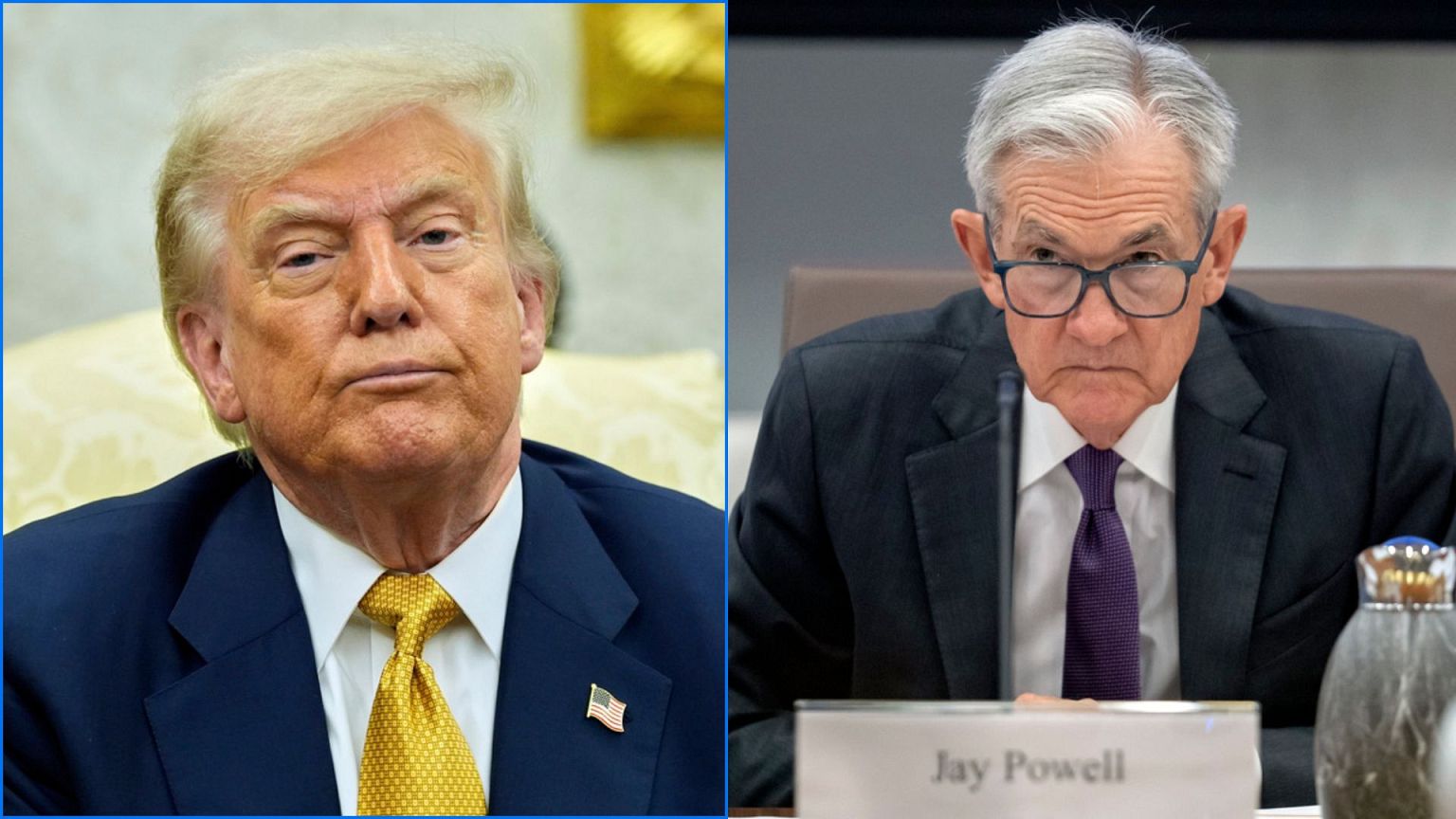
Market Rollercoaster: The Turbulent Week of Presidential Rumors and Fed Leadership
The recent market shake-up sparked by persistent rumors about President Trump potentially jettisoning Federal Reserve Chair Jerome Powell created a whirlwind of reactions among investors, policymakers, and industry experts alike. What started as unsettling headlines quickly evolved into a tense narrative of speculation, doubt, and eventual relief—once the president openly dismissed the reports as “highly unlikely.” This op-ed takes a closer look into the situation, weighing the reactions on Wall Street, the underlying political tensions, and the broader impact on the U.S. economic landscape.
In the world of economic news and financial markets, days like these are filled with twists and turns that can leave even seasoned investors trying to figure out a path amid the confusion. This editorial will examine the market’s rollercoaster ride, analyze the president’s public remarks, and discuss what this episode reveals about the complicated interplay between political messaging and market dynamics.
Investor Sentiment Amid the Confusing Bits of Political Drama
The dramatic swings witnessed on Wednesday were a clear indicator of how closely the market is tethered to political signals. Early in the trading session, widespread speculation—fueled by a Bloomberg report quoting a White House official—suggested that President Trump was on the verge of dismissing Powell. This news set off a cascade of sell-offs as investors feared that such a dramatic change in leadership could lead to erratic economic policies.
Shortly after these unsettling announcements, Trump held a press conference to dismiss the rumors, describing any decision to remove Powell as “highly unlikely.” This statement provided some much-needed relief among investors, who celebrated the reassurance of a stable Federal Reserve. Though the trading floor experienced a few nerve-racking moments, the major indices eventually managed to recover and close the day on a positive note.
Understanding Market Reactions and Key Index Movements
The initial shock on Wall Street led to significant sell-offs, especially in key indices like the S&P 500, Dow Jones Industrial Average, and Nasdaq. Below is a brief table summarizing the indices’ movements during the day:
| Index | Initial Movement | Closing Performance |
|---|---|---|
| S&P 500 | Fell by 0.6% | Recovered to up 0.3% |
| Dow Jones | Lost 264 points | Gained 231 points from the open |
| Nasdaq | Dropped by 0.8% | Ended 0.3% higher |
The table above highlights how the market briefly succumbed to bearish sentiments before being buoyed by the president’s reassurance. Investors clearly do not appreciate the nerve-racking uncertainty that even a whiff of political interference in monetary policy can bring, and the fleeting drop in the indices shows just how sensitive the market is to such announcements.
The Political Perspective: Dissecting the Trump-Powell Controversy
At the heart of this volatile episode lies a political conflict that goes beyond mere speculation about a personnel change at the Federal Reserve. President Trump has long been an outspoken critic of Jerome Powell, largely because he views the Fed’s cautious approach to cutting interest rates as a hindrance to his broader economic agenda. The president’s repeated calls for lower rates are driven by a desire to reduce the burden of interest payments on the national debt—a goal that has often placed him at odds with Powell’s measured stance.
What makes the situation even more tangled are reports from sources such as the New York Times, which mentioned that Trump had reportedly drafted a letter to fire Powell and even shared it with Republican lawmakers. Such revelations underline the problematic interaction between political expectations and the operational independence of a key institution like the Federal Reserve. Even though the president later retracted these intimations, the brief period of uncertainty left many investors irked over the potential meddling of politics in the crucial economic machinery of the United States.
Reasons Behind the President’s Frustration
To better appreciate the president’s stance and subsequent outburst against Powell’s policies, consider the following key factors:
- Pressure for Immediate Economic Relief: The persistent demand for rapid interest rate cuts resonates with many who believe that lower rates can boost investment and ease debt pressures.
- Long-Term Fiscal Concerns: Lower interest rates are seen as a way to contain the national debt’s ballooning interest payments, a goal that the president regards as essential for fiscal discipline.
- Political Messaging: By vocally opposing Powell’s decisions, the president positions himself as a champion for traditional, immediate economic relief, aligning with his base’s expectations.
- Partisan Tensions: The mere suggestion of a political figure dictating monetary policy creates a scenario loaded with issues, adding another layer of complexity to an already volatile environment.
The above points collectively illustrate why any hint of Powell’s removal can spark tumult both in the financial markets and in the public discourse. Investors, acutely aware of the potential ripple effects on monetary policy, view the Federal Reserve as a non-partisan stabilizer in times of economic distress.
The Economic Implications: Interest Rates, Inflation, and Growth
Beyond political posturing, the heart of the matter remains deeply economic. Jerome Powell’s reluctance to implement further rate cuts is rooted in a broader strategy aimed at managing inflation and fostering sustainable economic growth. With recent forecasts suggesting a year of higher inflation and tepid economic expansion, Powell’s deliberate pace and cautious approach to monetary policy have been designed to balance these competing concerns.
Price stability and sustainable growth are two faces of the same coin—a coin that has seen its smooth flip disrupted by political interference and market anxiety. Investors appreciate Powell’s stance because it implies a measured approach in addressing potential inflationary pressures, even if it means foregoing immediate relief in the form of lower rates. Conversely, the president and his supporters argue that lower rates could stimulate economic activity and reduce the pressures felt by those burdened by rising debt costs.
Potential Consequences of Rapid Interest Rate Cuts
Introducing swift, large-scale interest rate cuts may seem like a straightforward solution, but doing so comes with a host of tricky parts that need careful consideration. Let’s outline some of the potential pitfalls:
- Inflation Escalation: Rapid rate cuts could spark overheating in the economy, leading to higher inflation—a key risk that central bankers are generally keen to avoid.
- Market Volatility: Investors dislike sudden changes. Even temporary disruptions can undermine confidence in economic policy stability.
- Currency Devaluation: Lower rates might weaken the national currency, which can hurt the country’s international trade balance.
- Asset Bubbles: Low-interest environment might fuel overvaluation in certain asset classes, making the market prone to bubbles that could burst unexpectedly.
While these points outline the potential dangers, it is also clear that maintaining a balanced approach is essential. The current trajectory aims to mitigate these risks by ensuring that any changes in monetary policy are coupled with measures designed to stabilize the broader economy.
Political Interference and the Importance of Fed Independence
An important undercurrent in this debate is the principle of central bank independence. The Federal Reserve, by design, operates separate from direct political pressures to ensure that monetary policy decisions are based on economic indicators rather than political agendas. While public statements by political figures like President Trump can certainly be influential, the long-term credibility of the Fed hinges on its ability to steer through challenging economic waters without succumbing to political whims.
Over the years, the idea that the Fed could be “managed” by political leaders has been a contentious issue. Investors and economists alike understand that any attempt to directly steer monetary policy through political intervention risks muddling the fine points of fiscal management and undermining confidence in the system. Thus, the brief excitement—and subsequent relief—that followed Trump’s remarks on Powell underscores a fundamental tenet: economic policies are best served when insulated from overt political maneuvering.
Why Fed Independence Is Super Important
Understanding why many market experts and economists call Fed independence a must-have for maintaining economic stability can be broken down into several key reasons:
- Consistency in Policy: Independent central banks can maintain a steady approach to monetary policy, offering predictability that markets craves when making investment decisions.
- Long-Term Economic Health: Short-term political expediency often conflicts with long-term strategies needed to control inflation and promote sustainable growth.
- Investor Confidence: An autonomous Fed fosters trust among investors, assuring them that decisions are being made based on economic data rather than transient political pressures.
- Global Credibility: In an interconnected world economy, the perceived independence of the Federal Reserve enhances global trust in U.S. financial policy.
In essence, while political leaders may argue for rapid responses to economic challenges, history has repeatedly shown that sustainable fiscal strategies require institutions that can take a longer view—prioritizing stability over political expediency.
Lessons for Investors: Staying Steady Amid Tense Market Conditions
The events surrounding the Powell controversy serve as a potent reminder for investors on how quickly market sentiment can shift with political rhetoric. For those managing their portfolios during times of turbulence, the value of keeping a cool head cannot be overstated. Market swings driven by political headlines are usually short-lived, but they offer important insights into the dynamics of investor behavior during tricky parts of economic uncertainty.
To better equip themselves for such moments, investors can adopt practices that help them figure a path through volatile market conditions:
- Diversification: Spreading investments across different asset classes, sectors, and geographies can help mitigate risks associated with sudden market shocks.
- Long-Term Perspective: Focusing on long-term growth rather than short-term fluctuations can enable investors to weather temporary downturns.
- Staying Informed: Keeping abreast of both economic indicators and political developments offers the context needed to navigate periods of uncertainty.
- Consulting Financial Advisors: Professional guidance can provide tailored advice during nerve-racking periods, ensuring personal investment strategies align with broader economic realities.
Investors should also consider that market corrections are a natural part of the economic cycle. Temporary setbacks—even ones triggered by political narratives—are not necessarily indicative of a longer-term decline, especially when fundamental economic policies remain sound.
The Broader Economic Outlook: Can Stability Be Maintained?
While the immediate reaction to the news about Powell’s potential ouster was one of anxiety, broader economic indicators suggest that the U.S. economy possesses the resilience needed to absorb such shocks. Central banks around the world have repeatedly demonstrated that economic policies rooted in sound analysis can weather even the most tense political climates. For the U.S., the key will be preserving the delicate balance between accommodative monetary policy and the need to rein in inflation.
With ongoing debates about interest rates, fiscal responsibility, and the role of political oversight, the coming months are expected to be filled with interesting—and occasionally intimidating—tensions. As market participants, policy wonks, and business leaders keep a close eye on these developments, the focus must remain on policies that foster sustainable growth rather than reactive measures driven by momentary political pressure.
Key Considerations for a Stable Economic Environment
Here are some of the critical factors that will shape the economic landscape as it contends with both domestic and international challenges:
- Balanced Monetary Policy: The Federal Reserve’s commitment to a measured pace of interest rate adjustments is aimed at managing inflation while ensuring that economic growth does not stall.
- Fiscal Responsibility: Complementary fiscal policies that address national debt concerns without jeopardizing economic stability are crucial for sustained recovery and progress.
- Global Interconnectivity: As global trade and international investments remain deeply intertwined, domestic economic policies must also factor in external influences such as foreign monetary policies and geopolitical stability.
- Clear Communication: Government and central banks need to provide clear and consistent messages that help markets avoid the nerve-racking uncertainty bordering on rumor-driven panic.
Adhering to these principles will be super important in the months ahead as policymakers work to steer through the tangled issues of economic recovery, domestic politics, and global instability. The delicate balance between acting swiftly to address economic challenges and maintaining the steady hand required for long-term growth has never been more critical.
Putting It All Together: Reflections on Leadership, Policy, and Market Dynamics
The saga unfolding around President Trump’s remarks and the status of Fed Chair Jerome Powell is a microcosm of the broader challenges facing modern economic policy. The case clearly underscores how political posturing, combined with market sensitivity, can result in abrupt shifts that temporarily unsettle even the most robust financial systems.
For many, this episode is a reminder that the fine points of economic management are best handled by institutions designed to take a long-term view—institutions that remain largely insulated from day-to-day political controversies. While the interplay between fiscal policy and political messaging can be riddled with tension, it is vital for investors, policymakers, and business leaders to remain focused on sustaining economic stability in the face of short-term challenges.
In the aftermath of the chaos, the market’s resilient rebound has reinforced the notion that investor confidence is largely anchored in the credibility of established institutions. As long as the Federal Reserve persists in its methodical approach, and as long as political leaders respect the boundaries that ensure its operational independence, the U.S. economy is likely to continue on a path of measured progress—even if it means enduring a few nerve-racking moments along the way.
Moreover, this incident has provided a fertile ground for debate about the appropriate levels of political influence over economic policy. Both sides of the aisle are now more acutely aware of the need to balance immediate political imperatives with the long-term consequences of monetary policy decisions. While the temptation to allow political goals to override economic logic is often too strong during periods of national stress, history suggests that caution, stability, and a focus on fundamental economic principles usually prevail in the long run.
Lessons for Business Leaders and Policymakers
For those steering small businesses, industrial manufacturing operations, automotive giants, and even emerging sectors like electric vehicles, the recent market episode offers several takeaways:
- Anticipate Volatility: Even well-established market players must be prepared to figure a path through periods of volatile political and economic news. A robust risk management strategy can help mitigate the impacts of sudden market swings.
- Emphasize Long-Term Planning: Short-term political developments may cause temporary setbacks, but a commitment to long-term business strategies often provides the best buffer against market uncertainty.
- Understand Policy Implications: Business owners and decision makers should keep abreast of the evolving economic policy landscape. Being informed about the subtle details of fiscal and monetary policies can foster better decision-making in turbulent times.
- Invest in Advisory Resources: Utilizing seasoned advisors who can help navigate the confusing bits of economic policy and market shifts is a smart move. Their insights, drawn from years of experience, can be crucial during times of rapid change.
For elected officials and policymakers, this episode also underlines the responsibility they hold in creating an environment where economic stability is prioritized over sensational headlines. Ensuring that communications are clear, decisive, and free from unnecessary interference is not only good practice—but necessary for maintaining investor trust and market integrity.
Looking Ahead: A Cautious Optimism for Economic Resilience
In the wake of this political and market drama, the long-term outlook for the U.S. economy remains cautiously optimistic. Although investor nerves were stretched thin by the potential shake-up at the top of the Federal Reserve, the subsequent recovery demonstrated that markets value stability over sudden change. As history has shown, well-anchored monetary policies and a commitment to transparency tend to restore confidence, even after occasions filled with dramatic twists and turns.
From the perspective of small business owners and industry leaders—from industrial manufacturing hubs to the competitive world of automotive and electric vehicles—consistency in economic policy is key. The longer-term implications of sustained, thoughtful monetary management are a promise of a more steady business climate, even if the path to get there is occasionally filled with nerve-racking and overwhelming moments.
Preparing for Future Volatility: Strategic Considerations
While the current episode has been a wake-up call for many, it also provides a blueprint for managing future episodes of political and market turbulence. Here are some strategic considerations that organizations across sectors may wish to adopt:
- Scenario Planning: Develop multiple contingency plans that address various potential economic scenarios, from moderate market corrections to more severe shocks triggered by political influences.
- Enhanced Communication: Establish robust channels for internal and external communication to ensure that all stakeholders are quickly updated during periods of uncertainty.
- Financial Cushioning: Maintaining liquidity and a diversified asset base can be critical for weathering periods when market confidence is on edge.
- Policy Advocacy: Engage with industry groups and government forums that work to promote sustainable economic policies and underscore the importance of institutional independence and orderly monetary policy decisions.
By preparing for future disruptions and maintaining a commitment to core business strategies, companies can turn periods of volatility into opportunities for growth, innovation, and resilience.
Final Thoughts: Balancing Politics, Markets, and Economic Fundamentals
As the debate over President Trump’s negative comments regarding Jerome Powell shows, the world of economics is an arena where political narratives and market realities continually intersect. While such intersections can lead to temporary turmoil characterized by unsettled investor sentiments and the occasional dramatic headline, they also reinforce the enduring importance of institutional stability and transparency.
Both market participants and policymakers must learn to steer through the tricky parts and tangled issues with clear, data-driven decision-making. The temporary dips in market indices serve as a reminder of the fragility of investor confidence, yet they also underscore the powers of reassurance and resolve. When leaders emphasize steady, informed policy rather than succumbing to on-the-edge political theatrics, the market responds in kind—demonstrating time and again that stability is not just a fleeting sentiment, but a foundation for long-term prosperity.
The current landscape, with all its nerve-racking twists and complicated pieces, ultimately calls for a judicious blend of political foresight, economic discipline, and unwavering commitment to the core principles that have traditionally guided monetary policy. As the U.S. continues to navigate the confluence of political pressures and economic challenges, a forward-looking focus on institutional soundness and strategic resilience will remain the key to sustaining investor confidence and ensuring a strong economic future.
For investors, businesses, and policymakers alike, the events of this week serve as both a warning and a reassurance: while the interplay of political rhetoric and economic policy may create fleeting moments of worry, the enduring strength of well-grounded monetary institutions—aided by clear and consistent leadership—will ultimately pave the way for a more stable and prosperous economic environment.
As we step into the future with these lessons in mind, it is critical to regard political outbursts and market gyrations as transient phenomena, best countered through foresight, preparation, and a steadfast dedication to balanced economic principles. By embracing these ideals, the United States, its business community, and its investors can confidently manage their way through any challenging turn that may lie ahead.
Originally Post From https://fortune.com/2025/07/16/trump-powell-fired-markets-wednesday/
Read more about this topic at
Trump says it’s ‘highly unlikely’ he’ll fire Powell after …
Trump repudiates draft letter to fire US Fed chair Powell