
UK Economic Slowdown and the Shifting Employment Landscape
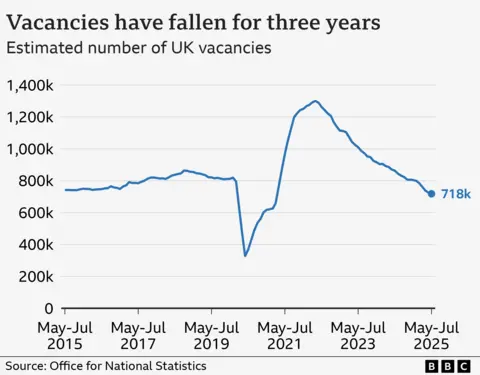
The current economic picture paints a story of transformation in the highly competitive labour market. In recent months, as employers across the United Kingdom face a slowing economy, they have reacted by cutting back on annual pay increases, paring down hiring plans, and reducing incentive bonuses. The situation – marked by subtle details and tangled issues – is creating a scenario where, although the unemployment rate remains steady at 4.7%, the availability of job vacancies has shrunk substantially, creating challenges and opportunities that deserve a closer look.
The Impact of Rising University Graduates on Labour Supply
A significant shift has emerged on the employment front: a notable rise in the number of university graduates actively seeking work. On one hand, this influx has expanded the pool of available talent; on the other, it has heightened competition among job seekers. With graduates eager to launch their careers, employers now have access to a wider array of candidates, and many are rethinking their strategies with these new dynamics in mind.
Key points in the changing landscape include:
- Increased competition: More graduates mean a more competitive market, where employers can sample from a vast range of candidates.
- Skill over quantity: Despite the larger labour pool, the challenge remains to match graduates’ skills with the needs of sectors that are already grappling with economic pressures.
- Fresh perspectives: With new graduates bringing modern approaches and a readiness to embrace digital tools, companies have a unique opportunity to tap into innovative ideas.
The rise in university graduates contributes to the overall perception of the market being “looser” compared to the tight, red-hot conditions experienced in the post-pandemic period. As businesses figure a path through these developments, the long-term question remains whether a surplus of highly qualified workers can be converted into more holistic economic recovery.
Employer Incentives: Reductions in Bonuses and Hiring
Recent data from the Office for National Statistics (ONS) reveals that while overall pay growth – including bonuses – has declined from 5% to 4.6%, when contractors remove one-off awards, annual growth remains unchanged at 5%. This disparity suggests that many companies are lounging back on extra incentives, indicating that bonus schemes are being used more sparingly as employers try to control their expenses.
This behaviour points to several tricky parts in the picture of modern employment:
- Bonus cuts: Employers are reducing one-time rewards in favour of consistent pay increases, hinting at growing caution amid economic uncertainty.
- Hiring constraints: With 44,000 fewer vacancies recorded in recent data, firms appear increasingly reluctant to recruit new staff or even replace those who have left. The continuous fall in vacancies – marking the 37th consecutive quarterly drop – emphasizes the reality of tougher economic conditions.
- Sector-specific incentives: Industries known for paying substantial bonuses, such as finance and business services, are seeing even steeper declines in regular growth rates, with figures landing near 3.1%.
These decisions by employers are making it clear that bonuses and one-off incentives, once seen as a crucial part of compensation packages, have become less of a priority. The trend is largely driven by the need to manage rising labour costs and the pressure to keep operational expenses in check during these nerve-racking times.
Government Policies and Economic Uncertainty
In parallel with these market adjustments, the UK government is facing its own set of challenges. Economic forecasts and policy shifts over the coming months are set to shape the labour market in significant ways. Several public statements and policy positions have emerged to address this evolving landscape.
Recent commentary by senior figures in financial circles – including experts from the accountancy body ICAEW – highlights that the combination of rising employer National Insurance contributions and fears of further tax increases have made the hiring process more intimidating for businesses. For example, the increase in National Insurance in April has had a lingering effect, making companies more cautious about expanding their workforce.
In anticipation of these pressures, government ministers have emphasized their commitment to reducing unemployment. Initiatives focusing on connecting people with “good jobs” – through integrated efforts involving work, health, skills support, and transforming job centres – are touted as the way forward. However, critics warn that without addressing the underlying economic uncertainty, these measures could prove insufficient to counteract the broader slowdown in hiring trends.
Sectoral Differences: Retail, Finance, and Hospitality
A closer look at the data reveals that the impact of the economic slowdown is not uniform across all sectors. Industries such as retail and hospitality have experienced more significant job losses, particularly among lower-paid roles, while sectors like finance and business services – known for higher bonus payouts – are also feeling the pinch, albeit in different ways.
The following table summarizes the recent trends seen across a few key sectors:
| Sector | Key Employment Changes | Notable Trends |
|---|---|---|
| Retail & Hospitality | Job losses concentrated in lower-paid roles | Significant downturn in hiring; caution in pay increases |
| Finance & Business Services | Lower bonus growth rate (approximately 3.1%) | Reduction in one-off incentive schemes; tighter recruitment |
| Public Sector | Steady increase in payroll wages (5.7% increase reported) | Government-led interventions aimed at job creation |
Each sector is grappling with its own set of tricky parts and tangled issues, making it clear that a one-size-fits-all approach to economic recovery and labour market policies will not suffice. For instance, while the public sector sees a steady rise in wages due to coordinated government initiatives, private sector firms are still reeling from the dual pressure of rising costs and uncertain future tax changes.
Perspectives from Leading Economists and Policy Advisors
Senior economists and industry analysts are unanimously in agreement that the current labour market dynamics are a mixed bag of positive and negative signals. Hannah Slaughter, a senior economist at the Resolution Foundation, notes that while the unemployment rate appears stable when measured at 4.7%, there has been an underlying shift compared to pre-pandemic levels. Just a few years ago, the labour market was described as “red hot,” a stark contrast to the present environment, which now appears both loose and on edge.
Key observations from leading experts include:
- Persistent job losses: Over the past eight months, the market has shed 165,000 payrolled positions, with many losses concentrated in low-paying sectors.
- Sectoral resilience: Public sector jobs exhibit more robust wage growth, while private enterprises are more sensitive to fiscal changes and increased operational costs.
- Potential policy responses: With mounting pressure from business groups and economic experts alike, there is a growing consensus that a balance must be struck between raising the minimum wage to support low-income workers and preventing further job losses.
These insights showcase the delicate balance facing both policymakers and business leaders as they attempt to figure a path through a climate of rising labour costs, subtle shifts in consumer spending, and the unpredictable influences of broader economic trends.
Analyzing the Economic Ripple Effects on Hiring and Wage Growth
The interplay between slowing wage growth and reduced hiring is emblematic of the broader economic challenges confronting the UK. Although the reported figures – a slight reduction in overall pay increases and a marked fall in new job vacancies – may seem moderate at first glance, they belie deeper, more tangled issues beneath the surface.
To further unpack this, consider the following points:
- Wage pressures: Many businesses are now facing higher labour costs, not only because of direct wage increases but also due to rising contributions like National Insurance. This creates a wave of economic tension that makes employers wary of committing to full-blown hiring campaigns.
- Impact on business confidence: When faced with intimidating macroeconomic uncertainty, companies are working through the trickier parts of balancing short-term spending against anticipated future growth. This cautious approach has led to a contraction in recruiting efforts — a move that might prove self-reinforcing if businesses delay hiring until the macroeconomic picture appears clearer.
- Long-term workforce planning: Organisations that once prioritized rapid growth through aggressive recruitment are now reconsidering their strategies, weighing the benefits of hiring only when absolutely necessary against the risks of over-expansion in uncertain times.
It is clear that while nominal unemployment figures remain stable, the underlying dynamics are far more complex. In many respects, the economy is now contending with the hidden complexities and small distinctions in how businesses are balancing cost-cutting measures with the need to maintain operational strength.
How Businesses are Adjusting to Rising Labour Costs
One of the most nerve-racking aspects for companies today is the impact of rising labour costs. The surge in employer National Insurance contributions and related fiscal measures has forced companies to re-evaluate their expenditure on human resources. In this environment, businesses are not only trimming bonuses but are also reducing the overall number of hires.
Some of the adjustments observed include:
- Stricter recruitment criteria: Firms are more selective, choosing candidates who bring multiple skills to the table and who promise immediate value, thereby reducing the need for further training investments.
- Optimised compensation structures: Instead of expansive bonus schemes, many companies are moving towards a model of steady, predictable wage increases – designed not to shock budgets but to provide consistent support to employees.
- Enhanced productivity focus: With fewer new hires, businesses are increasingly pushing for productivity gains among existing staff, often by investing in training and digital tools that enable employees to work smarter rather than harder.
While these measures may seem like straightforward cost-cutting decisions, they are also reflective of a broader mindset shift. Business leaders are now more inclined to put long-term stability ahead of immediate expansion, understanding that the twists and turns of today’s economic climate demand a measured, risk-averse approach.
Small Business and Industrial Manufacturing: Unique Challenges Amid Uncertainty
The slowdown in hiring and the cautious approach to wage increases have had especially pronounced effects on sectors like small business operations and industrial manufacturing. These fields, already vulnerable to shifts in economic confidence, are now facing even more intimidating market pressures.
For small business owners and manufacturing leaders, the current climate means dealing with several complicated pieces:
- Cash flow pressures: With fewer incentives available to attract and retain talent, small businesses are finding it nerve-racking to maintain a competitive edge without compromising on salary budgets.
- Operational adjustments: Industrial manufacturers, in particular, must balance the need for skilled labour with the rising costs associated with employing that labour. This often leads to tough decisions about when and where to invest in additional hiring or technology upgrades.
- Adapting to market realities: In an environment where the job market is loose and evolving rapidly, small business owners are forced to take a closer look at how they can remain agile and responsive – a task that might involve reorganising workflows, investing in automation, or even exploring new markets.
These challenges are compounded by the fact that many of the issues involved – such as the fine points of cost management or the subtle differences in policy impact – are often interwoven with broader economic trends. As such, small business and manufacturing sectors must continuously figure a path through both internal and external factors that shape their operational strategies.
Marketing Strategies and Economic Sentiment in the Hiring Market
Marketing professionals have long understood that public perception plays a crucial role in business performance. The recent changes in hiring trends and pay structures have prompted many marketing teams to re-evaluate how they present their brands to potential job seekers and investors alike.
Key considerations for marketing in this environment include:
- Communicating stability: In times when the job market is seen as loose and uncertain, it is super important for companies to highlight their commitment to long-term employee development and stability. This not only reassures existing staff but also attracts top talent who value a secure work environment.
- Brand positioning as a prudent employer: With corporate narratives shifting towards cost-control and streamlined operations, businesses are increasingly emphasizing their reputation as careful, well-managed organisations. Such positioning can help mitigate concerns around wage freezes or reduced bonuses, portraying them as smart business choices rather than signs of financial distress.
- Adapting to economic sentiment: Marketers must also stay attuned to public sentiment that is loaded with tension and uncertainty. By aligning messaging with the current economic climate, companies can strike a balance between confidence and caution, ensuring that all communications resonate with both employees and potential hires.
By integrating economic insights with marketing strategies, businesses can effectively manage perceptions during these challenging times. Ultimately, success hinges on a deep understanding of both the subtle details and the larger shifts that define today’s labour market.
Automotive and Electric Vehicle Industries: A Parallel Narrative
While the broader economy faces significant shifts in hiring and pay structures, specific sectors such as automotive manufacturing and the burgeoning electric vehicle (EV) market chart a parallel, yet distinct, conversation. Companies in these fields are undergoing transformations that echo wider trends, even as they explore innovative approaches to maintain competitiveness.
For the automotive industry and EV manufacturers, the current situation is characterized by several off-putting challenges:
- Investment in technology versus labour: With rising labour costs, a growing number of companies are exploring automation and digital tools to boost productivity, potentially reshaping traditional manufacturing roles.
- Talent acquisition in specialised fields: The demand for niche skills in EV technology is high. Yet, as employers become more cautious about their hiring budgets, there is a tension between the need to attract top-tier engineers and the imperative to manage costs.
- Sustainability and market leadership: Despite the headwinds of economic uncertainty, many companies are doubling down on green technology investments. This strategic pivot demands that they compete for talent in both technical and managerial roles under conditions that remain riddled with challenges.
In the fast-evolving automotive landscape, these tricky parts require companies to not only streamline their hiring processes but also to take a closer look at how best to balance short-term financial pressures with the long-term need for innovation. The journey ahead will require deft management of the subtle details that underpin both recruitment and operational efficiency.
Looking Ahead: Future Predictions and Policy Considerations
With the current economic data serving as a stark reminder of the uncertainties ahead, both policymakers and business leaders are working through the tangled issues of growth, hiring, and wage determination with measured caution. While recent cuts in bonuses, a slowing pace of wage increases, and shrinking vacancy numbers might appear concerning, they also offer valuable insights into a market poised for gradual recalibration rather than outright collapse.
Several predictions can be gleaned from the current state of affairs:
- Continued moderate increases in unemployment: With rising costs linked to labour and persistent macroeconomic uncertainty, experts believe that unemployment may inch upward gradually. However, the overall job market is unlikely to see drastic spikes in the near future.
- Slow wage growth and careful hiring: Businesses appear set on a more cautious path, favouring measured, steady wage increases without resorting to extensive bonus schemes. As companies manage their budgets carefully, the hiring process is likely to remain subdued until economic forecasts improve substantially.
- Potential for policy intervention: Given the persistent tensions and the critical need for stability, government officials may introduce measures designed to smooth out the rough patches in the labour market. These could include targeted tax breaks, investment in job training initiatives, and revised regulations to help small businesses navigate rising employment costs.
Furthermore, there is growing dialogue on whether adjustments to fiscal policies – such as moderating National Insurance hikes – could enable firms to feel more comfortable with hiring. While any such policy shifts are likely to be subject to heated debates in Parliament, the underlying goal remains clear: ensuring a steady, sustainable recovery for the economy while managing the confusing bits of reform and fiscal responsibility.
Key Takeaways for Business Leaders and Job Seekers
For business leaders, the current economic climate demands that they find their way through a maze of strategic decisions related to hiring, compensation, and overall workforce management. At the same time, job seekers, particularly fresh graduates, need to grapple with a competitive market where the availability of positions is shrinking, even if the unemployment rate itself remains stable.
The primary takeaways include:
- Cautious optimism: Although the economic slowdown presents several intimidating challenges, the market is also evolving in ways that open up opportunities for innovation, digital transformation, and new business models.
- Adapting to change: Companies and individuals alike must be prepared to adjust their strategies, whether that means refining recruitment practices or re-skilling to meet emerging demands in an economy that is constantly in flux.
- Policy watch: Both employers and employees should keep a keen eye on upcoming policy changes. With fiscal measures and tax reforms likely to impact labour costs, staying informed is super important for making both personal and business-related decisions.
In summary, while the data shows a market that is cooling – from reduced bonus schemes to fewer job vacancies – the broader narrative is one of gradual transition rather than abrupt collapse. Both businesses and job seekers are challenged to steer through this period by continuously adapting to the twists and turns of an ever-changing economic landscape.
Final Reflections: Balancing Caution With Opportunity
The current employment scenario in the UK embodies a phase of transition that is replete with both challenges and openings for growth. The small, subtle details – such as the tiny shifts in overall wage growth and the specific reductions in one-off bonuses – represent more than mere statistics. They symbolize the fine points of a market that is working through difficult, nerve-racking phases while still holding on to the potential for new opportunities.
For employers who are rethinking their approach to recruitment in a market flooded with highly qualified new graduates, the key lies in managing risk while embracing a more efficient, productivity-driven model. At the same time, policymakers are tasked with balancing the demands of fiscal responsibility with the need to support job creation – a challenge that is both intimidating and essential.
As we look to the future, it is clear that the UK’s labour market will continue to evolve in ways that are both unpredictable and full of promise. The interplay of government policy, industry-specific trends, and the strategic responses by businesses will shape the ongoing narrative of employment in this nation. For now, staying informed, agile, and ready to adapt is the best course of action for all those navigating the current economic climate.
Conclusion: Embracing the Road Ahead
The economic slowdown has ushered in a period marked by cautious decision-making, modest wage adjustments, and a noticeable decline in available vacancies. While these trends may seem like setbacks, they also provide an invaluable window into the underlying mechanics of a market that is recalibrating itself. Employers are finding their way through complicated pieces such as rising labour costs and shifting employee expectations, while policymakers and business leaders look to mount a response that supports sustainable recovery.
Ultimately, the key message for everyone involved – from job seekers to industry titans – is that this phase of change, though loaded with problems and on edge with uncertainty, also serves as a crucible for innovation and adaptive strategies. By taking a closer look at the individual challenges and embracing a pragmatic, flexible approach to both hiring and compensation, the UK economy can not only weather these turbulent times but also emerge stronger and more resilient in the long term.
As the labour market continues to evolve, the journey ahead will require a blend of caution and creativity. It is now imperative for businesses, graduates, policymakers, and stakeholders alike to work through the tangled issues with a firm resolve – ensuring that every decision, every adjustment, and every policy initiative contributes to a robust and dynamic economic future.
Originally Post From https://www.theguardian.com/business/2025/aug/12/uk-employers-cut-back-on-bonuses-and-hiring-as-economic-slowdown-hits-jobs-market
Read more about this topic at
UK jobs market cools as vacancies fall
Cooling Job Market Opens Door to September Cut Despite …