
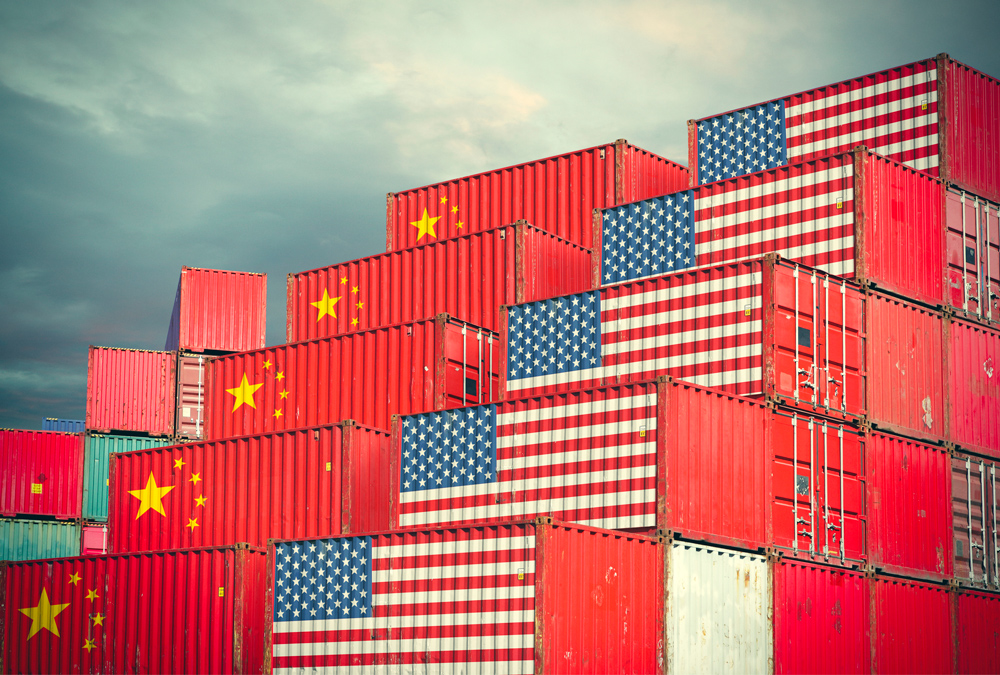
Understanding the Tangled Issues of the First China Shock
The first China Shock radically transformed the U.S. economy between 1999 and 2007. During that time, American manufacturing experienced severe setbacks as millions of jobs were lost in industries once thought to be the backbone of the nation’s prosperity. This shock was driven by China’s rapid shift from Maoist central planning to a market-oriented economy, a process that moved vast amounts of labor and capital from rural collectives to urban factories. The effects were particularly pronounced in communities where manufacturing had been the essential driver of economic stability.
Smaller towns like Martinsville, Virginia, and High Point, North Carolina, became emblematic of the dramatic changes, as their local economies—once celebrated for iconic products like sweatshirts and furniture—were overwhelmed by a flood of inexpensive Chinese goods. The experience of these communities is layered with twists and turns that continue to shape public debate over economic policy today. While it might seem overwhelming to unpick the fine points of this economic upheaval, understanding these tangled issues is key to figuring a path forward.
Researchers such as David Autor and Gordon Hanson were among the first to get into the nitty-gritty of how Chinese import competition resulted in permanent declines in employment and wages. Their work, published over several years, has been critical in helping policymakers understand the subtle details of the shock and its lasting impacts on American manufacturing sectors.
Rethinking U.S. Manufacturing Amid Changing Global Trade
One of the striking lessons from the first China Shock is the realization that American manufacturing was caught off guard by a competitor that was simply doing what it should have been doing decades earlier. Back then, the United States was not designed to compete across every category—from assembling sports shoes to producing consumer electronics. Instead, it excelled in more specialized, high-value-added products.
Today, however, American policymakers still face the tricky parts of addressing job losses in regions that have struggled to recover fully. Although there has been some rebound in manufacturing employment during the Obama, Trump, and Biden administrations, most of the gains have occurred in low-wage industries rather than in sectors that once promised long-term prosperity and career growth.
Key issues include:
- How to reinvigorate manufacturing communities devastated by import competition.
- Determining the balance between protecting domestic jobs and embracing a globalized market.
- Investing in education and skills training to help workers transition into emerging sectors.
The challenge remains to sort out how to manage your way through these complicated pieces of economic policy, ensuring that recovery efforts build resilience in communities where manufacturing once held sway.
Anticipating the New China Shock in Advanced Technological Sectors
While the first China Shock reshaped physical manufacturing, a far more nerve-racking scenario is unfolding on the technology and innovation front. Often referred to as China Shock 2.0, this emerging wave sees China transitioning from an underdog competitor to a frontrunner in industries that were long dominated by U.S. firms.
China is now aggressively challenging American leadership in sectors such as aviation, artificial intelligence, telecommunications, microprocessors, robotics, nuclear power, quantum computing, biotechnology, and renewable energy technologies like solar power and batteries. This shift is not just a matter of competing for market share; it represents a fundamental change in where economic power and high-wage jobs will be concentrated in coming decades.
It is important to take a closer look at this transformation because knowing the subtle details of what is at stake can help explain why policymakers are increasingly concerned about China Shock 2.0. When China controls key components of technology supply chains, it gains not only economic leverage but also significant geopolitical clout. The U.S. risks losing its competitive edge in the innovation-driven sectors that promise enormous future growth.
Advanced Technology: The New Battleground
Unlike the first shock—which was about sheer production volumes and low-cost labor—the new shock is defined by control over complex bits of high technology and innovation. China’s massive workforce, which exceeds 100 million workers in manufacturing alone, is now being retooled to compete in fields that require not just quantity but also high quality and innovation.
In this context, American technology leaders such as General Motors, Boeing, and Intel are facing unexpected challenges. Although these companies were once seen as national champions, they now find themselves in a tense battle against Chinese firms that are investing aggressively in research and development. The race today is not merely about manufacturing products but about building the next generation of critical technologies.
Below is an illustrative table showing the comparative strength of research output across several high-tech fields:
| Sector | U.S. Share (%) | China Share (%) |
|---|---|---|
| Electric Batteries | 25 | 46 |
| AI Algorithms and Hardware Accelerators | 15 | 38 |
| Advanced Optical Communication | 15 | 37 |
| Advanced Magnets and Superconductors | 16 | 28 |
| Machine Learning | 27 | 26 |
| Quantum Sensors | 30 | 18 |
| Advanced Integrated Circuit Design | 29 | 17 |
| Adversarial AI | 42 | 17 |
| Natural Language Processing | 37 | 16 |
| High Performance Computing | 42 | 13 |
| Quantum Computing | 33 | 13 |
This table highlights the small distinctions in research output that illustrate China’s growing dominance in fields that were once unquestioned strongholds of the U.S. These figures are a potent reminder that the shift is not just gradual—it is systemic and profound.
Policy Challenges in a World of Shifting Industrial Strengths
In light of these developments, conservative approaches that look solely to the past may not serve us well. Policymakers need to get into the nitty-gritty of both past mistakes and future opportunities. The solutions that were appropriate during the first China Shock might now be insufficient against a rapidly evolving and intensifying competition in high-tech sectors.
Key policy challenges include:
- Modernizing industrial policy to support research and innovation in advanced technologies.
- Investing in education and training programs that prepare workers for new technology-driven industries.
- Developing strategies to mitigate the negative effects of global competition while ensuring that U.S. industries remain agile and competitive.
Policymakers must now work through multiple layers of economic and technological issues that are often intimidating and full of problems. The delicate task of balancing support for traditional manufacturing with the need to leap into emerging sectors is both nerve-racking and critical. To succeed, strategies must be super important, combining lessons from the past with forward-looking investments in research, technology, and infrastructure.
Geopolitical Implications and Military Dimensions
The reordering of the global economy through China Shock 2.0 is not limited to commercial competition—it has serious geopolitical consequences as well. The control of advanced technologies translates directly into military and diplomatic power on the world stage. As China extends its soft power in regions such as Africa, Latin America, Southeast Asia, and Eastern Europe, the U.S. finds itself at risk of losing influence far beyond its traditional economic domains.
Control over sectors like semiconductor manufacturing, quantum computing, and biotechnology underpins not just higher profits and high-wage jobs, but also shapes international alliances and security strategies. The benefits of technological leadership are manifold:
- Economic dividends from innovative technologies and new market opportunities.
- Enhanced geopolitical influence by setting standards and norms in international trade and technology.
- Strengthened military capabilities by ensuring access to cutting-edge defense technologies.
All of these points form key components of an overall strategy that seeks to maintain U.S. leadership in an increasingly competitive global landscape. Failing to find your way through the tangled issues of advanced technology competition could leave American global influence on the decline.
Charting a Course for U.S. Industrial Policy
Given these challenges, it is imperative that U.S. industrial policy is reinvented in a way that is as dynamic and forward-thinking as the global technologies it seeks to support. This means not only addressing the immediate needs of industries threatened by foreign competition but also investing in the off-putting twists and turns of tomorrow’s technology landscape.
Several strategies could help American industry take the wheel in this evolving scenario:
- Increased R&D Spending: Government incentives could encourage higher spending on research and development, particularly in areas where China is showing early signs of dominance.
- Public-Private Partnerships: Collaborative programs between government and industry are essential for speeding up technological breakthroughs and ensuring their commercial viability.
- Workforce Retraining Programs: As the economic geography shifts, it becomes crucial to provide workers with the training necessary for jobs in high-tech sectors—even if the transition is riddled with tension.
- Investment in Basic Infrastructure: From broadband expansion to upgrades in energy systems, ensuring that the foundational systems are state-of-the-art can make it easier for industries to adopt new technologies.
An integrated industrial policy framework that encourages innovation while also protecting domestic workers and industries is a must-have for the 21st century. By making super important investments now, the United States can prepare for the new China Shock before it escalates into an overwhelming challenge.
Learning from History to Mitigate Future Risks
A key lesson from the first China Shock is that the costs of underestimating a determined competitor can be extraordinarily high. American communities that once thrived on manufacturing continue to feel the residual effects of that turbulent period. Policymakers must continuously get into the detail of this past experience while also planning for future shocks that are likely to be even more challenging.
There is significant political pressure to look back and address the lingering issues of manufacturing decline—issues that can be as intimidating as they are complicated. However, introspection needs to be balanced with a forward-looking vision aimed at tackling emerging global trends. Focusing too much on past mistakes can be a nerve-racking distraction when urgent future challenges demand action.
Learning from the first shock does not imply a retreat into protectionism; rather, it calls for embracing innovation while finding your way through the rough patches of a globalized economy. American policymakers must dig into the nitty-gritty of both historical oversight and future opportunities to craft a strategy that is resilient and inclusive.
Preparing for a High-Tech Future: Key Strategies for Innovation
The relationship between economic policy, advanced technology, and global competition is full of problems—but it also presents exciting opportunities. To prepare for what many are calling China Shock 2.0, it is crucial for the U.S. to invest in domains where technological breakthroughs will define future industries and military strength.
Innovative strategies might include:
- Strengthening STEM Education: A well-educated workforce is essential for sustaining high-tech industries. Enhanced STEM (Science, Technology, Engineering, and Mathematics) education at all levels of schooling can help create the talent pool required for advanced manufacturing and technology development.
- Fostering Startup Ecosystems: Startup ecosystems in technology hubs can serve as incubators for breakthrough ideas that may eventually challenge established tech giants. Supporting these ecosystems through grants, tax incentives, and mentorship programs is critical.
- Expanding Research Networks: Collaboration between universities, government laboratories, and the private sector can accelerate innovation. Creating networks that facilitate information flow and resource sharing will help reduce the scary gaps in technology development.
- Modernizing Intellectual Property Laws: Given the rapid pace of technology development, intellectual property laws need to be updated to deal with the subtle differences among emerging technologies. Protecting innovation while encouraging competition can help maintain a vibrant tech industry.
These strategies represent more than just band-aid solutions to immediate problems. They are part of an overarching effort to ensure that U.S. industry remains competitive when faced with the new economic shockwaves emanating from China’s technological ascendancy.
Honing the Fine Points of Global Trade and Investment
International trade policy is another area where small adjustments can have a super important impact. While it is tempting to rely on familiar narratives and protectionist measures, forward-thinking policies require a more nuanced approach. One that recognizes the dual needs of safeguarding domestic industries and engaging in global supply chains in a mutually beneficial manner.
Consider the following aspects:
- Revisiting Trade Agreements: Trade pacts need to be renegotiated with modern economic realities in mind. This means accounting for the tricky parts of intellectual property, digital trade, and advanced manufacturing sectors.
- Attracting Foreign Investment: While it might seem off-putting at first, foreign direct investment can be a catalyst for technological innovation. Policies that attract foreign capital, while also ensuring domestic benefits, can help stimulate growth.
- Reducing Barriers to Technology Transfer: Streamlined regulations that facilitate the safe and secure transfer of technology across borders are essential for encouraging partnerships that drive innovation.
By balancing protection with openness, U.S. trade policy can create an environment where American companies are encouraged to invest in new technologies, while still reaping the benefits of international partnerships. This balanced approach is crucial for ensuring long-term economic dynamism.
Managing Economic Change through Infrastructure and Policy Reform
The road ahead is laden with many tricky parts—from modernizing infrastructure to reforming policies that are old and tangled. Yet, these challenges also offer a roadmap for transforming the U.S. economy into one that is resilient, innovative, and ready to face global competition.
Key areas to focus on include:
- Investment in Digital Infrastructure: Upgrading digital networks to support high-speed internet for every community is essential. With better connectivity, businesses can access cloud computing, research resources, and global markets more effectively.
- Energy Infrastructure Modernization: Transitioning to renewable energy sources and modern power grids not only benefits the environment but also lays the groundwork for new industries and job creation in high-tech sectors.
- Regulatory Overhaul: Simplifying regulations in key areas such as technology, trade, and labor can help companies innovate without being bogged down by red tape. Streamlined policies enable businesses to figure a path through increasingly competitive international markets.
This integrated approach is critical for stitching together segments of the economy that have been on edge for far too long. By addressing both the small distinctions in policy details and the overarching infrastructure challenges, the U.S. can build a robust foundation for competing on a global stage.
Charting the Future Amid Global Uncertainty
The emerging dynamics of China Shock 2.0 create a tense environment that is loaded with issues and unanswered questions. The underlying concern is not just the loss of manufacturing jobs, but the potential decline of American leadership in sectors that shape the future of global economics and security.
It is essential to note that the race in high-tech sectors is about more than immediate profits. It’s about maintaining a super important role in setting standards, driving innovation, and ensuring national security. The influence of technology on all spheres—from healthcare and education to defense and diplomacy—cannot be overstated.
Policymakers must, therefore, balance short-term pressures with long-term strategic planning. This balance requires making decisions that may seem intimidating in the moment but are crucial for the decades ahead. It is a nerve-racking challenge that involves:
- Forecasting future trends in technology and global trade with as much clarity as possible.
- Investing in educational and research institutions that feed into tomorrow’s industries.
- Collaborating across political and industrial lines to create policies that are both flexible and robust.
In many ways, the decisions made today regarding trade and technology will set the course for the U.S. economy for decades. The challenge is to get into the deep details of these choices while keeping an eye on broad, transformative trends.
Strategic Partnerships and Global Alliances
If history has taught us anything, it is that no nation is an island. The balance of global power, especially in tech-driven industries, requires strategic partnerships and alliances that can amplify the strengths of American industry. As the United States faces challenges from China’s expansive technological growth, forging solid alliances is not just strategic—it is essential.
Key areas where U.S. collaboration can make a tangible difference include:
- Research Collaborations: Joint research initiatives with allies can help share the burden of high research and development costs, while also promoting innovation that benefits all parties.
- Advanced Manufacturing Partnerships: Collaborative ventures that pool resources and expertise can lead to breakthroughs in sectors such as semiconductors, quantum computing, and renewable energy.
- Security Alliances: Strengthening security ties ensures that technological advances in defense will not fall under the control of a single competitor but will instead reflect a broader coalition of interests.
These partnerships serve as a bridge over some of the most intimidating aspects of international competition, allowing the United States to work through the mixed feelings of vulnerability while reinforcing its competitive edge.
Embracing Change: The Role of Innovation in Economic Revival
In an era defined by rapid technological change and increasing global competition, embracing innovation is more than a choice—it is a necessity. American industry must harness its spirit of ingenuity to reinvent itself, focusing on sectors that promise growth, resilience, and high-paying jobs.
Innovation can drive economic revival through several channels:
- Technological Breakthroughs: The development of groundbreaking technologies in fields such as artificial intelligence, robotics, and renewable energy can create new market opportunities and redefine global competitiveness.
- Entrepreneurial Ecosystems: When new startups flourish, they drive competition and foster an environment where fresh ideas challenge established norms.
- Capitalizing on Digital Transformation: The digital shift is creating avenues for more efficient work, enhanced productivity, and global connectivity, all of which contribute to a dynamic economy.
American leadership in innovation has traditionally been a super important element of its economic narrative. By nurturing technological ecosystems and encouraging public-private collaboration, the country can set a course that not only responds to current challenges but also anticipates future shocks.
Policy Recommendations for a Resilient Economic Future
To truly prepare for the changes ahead, comprehensive policy reform must address both immediate and long-term challenges. The following recommendations, drawn from decades of research and practical experience, offer a roadmap for building an economic system that is balanced, resilient, and adaptable:
- Boost Research and Development Funding: Increase federal and private investment in R&D, especially in sectors where global competition is fierce. This measure can help bridge the gap between current capabilities and the demands of tomorrow’s markets.
- Revamp Educational Curricula: Tailor education programs to address the skills required for emerging technologies. Emphasis on STEM education and vocational training can help workers transition smoothly into high-tech careers.
- Foster Technological Collaboration: Cultivate research partnerships between government, academia, and industry. These networks can drive the innovation necessary to tackle the overwhelming challenges posed by rapid technological change.
- Reform Trade Policies: Modernize trade agreements to reflect the realities of a technology-driven global economy. Encourage strategies that protect core industries while stimulating cross-border collaboration.
- Incentivize Domestic Manufacturing Innovation: Design policies that support the domestic production of critical technologies. This might include tax incentives, infrastructure investments, and support for emerging companies in the high-tech sector.
These recommendations are designed not to isolate the U.S. economy but to reinvigorate it, ensuring that American workers and companies remain competitive on a global scale while also benefiting from the spillover advantages of technological progress.
The Road Ahead: Balancing History and Future Challenges
As we stand on the threshold of a new chapter in global economic competition, it is clear that a balanced approach is necessary—one that respects the lessons of the past while ambitiously tackling the challenges and opportunities of the future. The first China Shock offered a stark lesson in the costs of unpreparedness, while China Shock 2.0 highlights the importance of proactive, forward-thinking policy.
The task now is to work through the tangled issues that come with high-tech rivalry, address the nerve-racking aspects of global trade, and support policies that encourage both domestic innovation and international collaboration. Doing so will require a concerted effort from politicians, business leaders, and communities alike.
There is no simple formula for the future of U.S. industry. Instead, it is a matter of continuously adapting to global shifts while keeping a close watch on the subtle details that define competitive advantage. American industries and policymakers must remain agile, ready to adjust strategies as the landscape evolves.
Conclusion: Preparing for a Future Defined by High-Tech Competitiveness
In conclusion, the evolving nature of the China Shock—from its manufacturing roots to a technology-driven future—demands serious reflection and action. The challenges are many: from retooling entire workforces to revisiting trade policies, the road ahead is full of tricky parts and fine points that require a balanced, forward-thinking strategy.
It is essential for the United States to invest super important resources in developing technology, modernizing infrastructure, and ensuring that workers have the skills needed to meet future demands. The stakes extend beyond economic growth—they are deeply intertwined with national security, global influence, and the future well-being of American communities.
By learning from the past and taking calculated steps to innovate in the present, American policymakers and industry leaders can prepare for the new China Shock. While the future can seem overwhelming and the challenges intimidating, the opportunity to steer through this period with insight and adaptability is within reach. The path forward involves a commitment to strategic investment, collaborative partnerships, and policy reforms that are designed to turn potential setbacks into avenues for long-term prosperity.
In a world where change is the only constant, it is up to us to figure a path through the twists and turns of global competition. Only by embracing innovation and remaining vigilant in the face of emerging challenges can the United States maintain its position at the forefront of global technological advancement and economic leadership.
Originally Post From https://www.nytimes.com/2025/07/14/opinion/china-shock-economy-manufacturing.html
Read more about this topic at
We Warned About the First China Shock. The Next One …
China is about to shock the U.S. economy again. …

